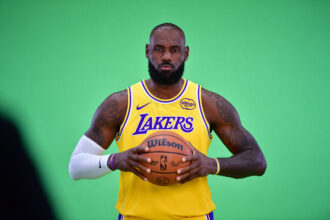



There’s a growing disconnect in the MVP race, and it’s less about the play of Luka Doncic and more about who decides the award. The voting pool, mostly national media members, is heavily based on the East Coast, and that imbalance is becoming obvious. If you’ve been watching Lakers games this season, it’s clear that Luka deserves recognition and has a big impact. The stats are there, the wins are there, and if you’re actually watching, it’s hard to ignore what he brings to the court.
East Coast Bias
The issue isn’t just about media bias or team loyalty, although that can play a role in how certain players are perceived. The bigger problem is access and timing.
West Coast games regularly tip off around 10:30 or 11 PM Eastern and can end well past midnight, making it difficult for many national media members to consistently watch full games. That’s understandable on a human level, especially for those with early morning TV or radio obligations. But it becomes a real issue when those same people are responsible for MVP votes that shape the league’s biggest individual award.
Narrative-Driven Voting
When voters aren’t consistently watching full games, something else fills the gap, and that’s where the problem grows. Instead of firsthand evaluation, decisions start to be influenced by highlights, box scores, and long-standing narratives. These don’t always reflect what’s happening on the court. That’s how outdated takes stick around, even when a player’s game has clearly evolved over the course of a season.
https://t.co/wWGNmWnCY9’s updated MVP Ladder:
1. Victor Wembanyama
2. Shai Gilgeous-Alexander
3. Nikola Jokić
4. Luka Dončić
5. Jaylen Brown
6. Cade Cunningham
7. Jalen Johnson
8. Kawhi Leonard
9. Donovan Mitchell
10. Anthony Edwards— NBACentral (@TheDunkCentral) March 27, 2026
Luka’s Defense
Take Luka’s defensive criticism as the clearest example of this disconnect. It has become a recycled talking point that continues to follow him despite visible improvements this season. Luka has been more engaged defensively, showing better effort, positioning, and physicality. He’s no longer the automatic mismatch teams hunt every possession. Opposing coaches have adjusted their approach, and players feel that difference in real time. But if you’re not watching entire games, it’s easy to miss that progression and fall back on old assumptions.
Should the Media Be Voting at All?
This brings up a bigger question about the MVP process. There’s a strong case that players and coaches would give a more accurate view. They’re directly involved in planning and playing the games. They see how Luka pressures defenses, the changes teams make to stop him, and how his presence can change a whole game. They comprehend far beyond stats or highlights.
This isn’t to say that every media voter is uninformed. Many do their homework and take the job seriously. The problem is that the system doesn’t demand that level of effort. There’s no real accountability for how votes are made. When an award as important as MVP is shaped by incomplete viewing or old stories, it creates a gap between performance and recognition that shouldn’t be ignored.
The Bottom Line
If the MVP is truly meant to represent the most impactful player in the league, then the process needs to evolve to match that standard. Whether that means stricter viewing expectations, changes to the voting pool, or incorporating more input from players and coaches. Because right now, Luka Doncic isn’t just competing against other MVP candidates—he’s competing against a system that isn’t always watching closely enough.