
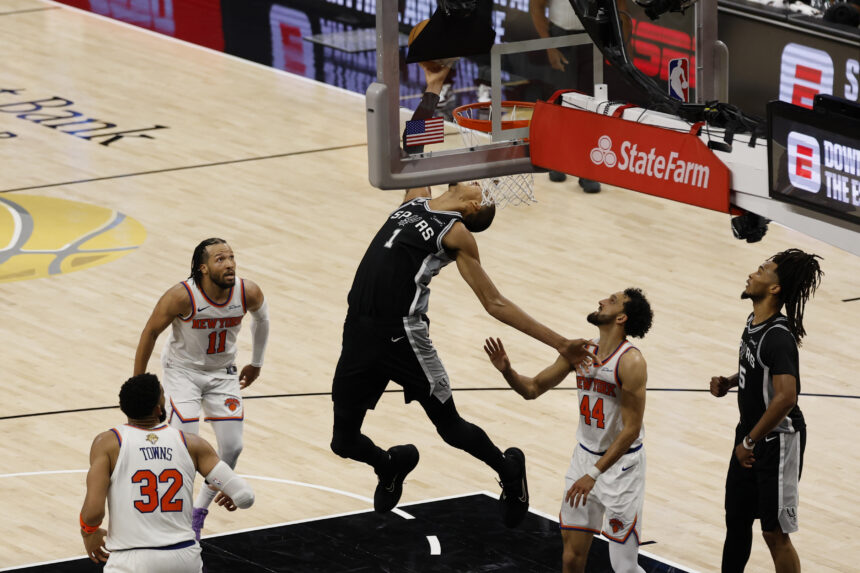
The NBA Finals matchup between the San Antonio Spurs and New York Knicks is a reminder of how difficult it has become to build a contender under the NBA’s current salary cap rules. But these roster builds also serve as blueprints for teams like the Lakers to become true contenders.
While the Spurs and Knicks took different paths to get here, both organizations discovered the same fundamental truth: Contending teams need elite talent that provides more value than its contract would normally suggest. If the Lakers want to get to the next level, they have to find value contracts.
Stars on Rookie Contracts
The Spurs have built their Finals team around one of the most valuable advantages in basketball: star-level production from players who are still on rookie-scale contracts. Victor Wembanyama is already one of the league’s best players, yet San Antonio is nowhere near paying him what a player of his caliber would command on the open market.
The same principle applies to Stephon Castle and Dylan Harper. While neither player has reached Wembanyama’s level, both are key pieces of the Spurs’ future and are still playing on cost-controlled rookie contracts. Often, this trio is the team’s three best players on the floor. When your best players are still on rookie contracts, you have so much room to build around them.
Instead of spending most of their cap space on just a few stars, the Spurs can add role players, build depth, and balance their roster. They get the results of a contender while paying much less than usual for that talent.
A Superstar Pay Cut
The Knicks reached the Finals by a different route. Instead of relying on rookie-scale deals, the Knicks gained their advantage when Jalen Brunson chose to take less than the maximum salary. They benefited from a contract that gave the franchise additional room to strengthen the roster around him.
With that extra flexibility, the Knicks could invest in top role players like OG Anunoby, Josh Hart, and Mikal Bridges. They are not superstars, but together they make up one of the league’s best supporting casts. Their versatility, defense, and two-way play have been key to New York’s success.
The Path for the Lakers
The Lakers currently do not possess either advantage. Their highest-paid players are established veterans, and the roster does not feature a young star producing at an elite level while still earning rookie-scale money. That makes it much more difficult to construct the kind of balanced roster that championship teams typically need.
Could this change? It is possible. Dalton Knecht or another young player might become a much bigger contributor than expected. Or maybe they draft a player with starter-level talent. Still, hoping for that kind of jump is less reliable than finding other ways to create financial flexibility.
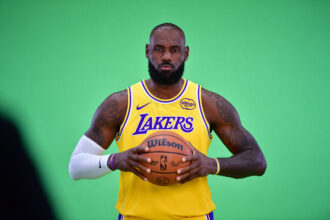
That is why the Knicks’ blueprint feels much more realistic for the Lakers than the Spurs’ model. The Lakers cannot suddenly create another Victor Wembanyama, Stephon Castle, or Dylan Harper on rookie contracts. What they can do is create additional cap flexibility if their own superstar, LeBron James, chooses to take less money.
A pay cut alone would not guarantee a championship. The front office would still need to spend that money wisely and identify the right pieces to surround Luka Doncic and Austin Reaves. But a LeBron pay cut would give the Lakers more resources to build a stronger roster.
The Spurs proved how valuable stars on rookie contracts can be. The Knicks showed how a superstar taking less money can help build a stronger team. For the Lakers, only one of these options is realistic, and it might be their best chance to become title contenders again.