

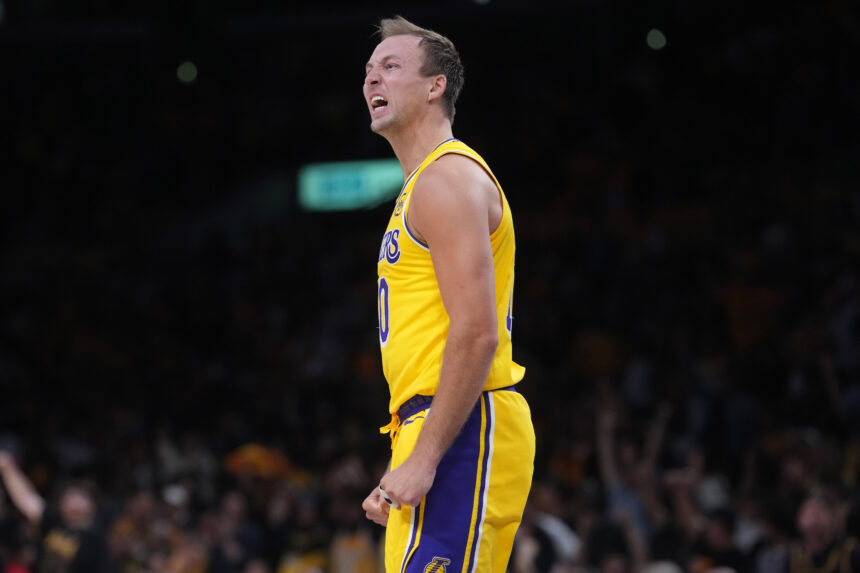
Luke Kennard had a career night and showed a path for the Lakers to win this series against the Rockets. Los Angeles relied on structure, execution, and clear offense instead of just star power. Even without Luka Doncic and Austin Reaves, the Lakers set the tone right from the start. Game 1 didn’t feel like an upset or a shock. It felt like a sign of what’s to come.
Kennard’s Explosion
Kennard’s 27 points might look like just a “hot shooting night” in the box score, but it was part of the Lakers’ game plan. They made a point of getting him involved early, using off-ball screens, pindowns, and flare actions to get him open. These weren’t tough, off-the-dribble threes. They were rhythm shots set up by smart plays.
Houston’s defense relies on length and athleticism, but those strengths turn into weaknesses when it comes to getting through screens and staying focused off the ball. The Lakers kept going after that weakness, forcing Houston’s defenders to make quick decisions and often causing confusion or late rotations. Once Kennard hit a few shots, the floor opened up even more, and the Rockets couldn’t break the cycle.
Kennard did more than just stand and shoot. The coaches trusted him with a bigger role and took advantage of what the defense allowed. When a shooter like him keeps getting open looks in the offense, it’s not just luck anymore—it’s a real problem for the other team.
LeBron Still In Control
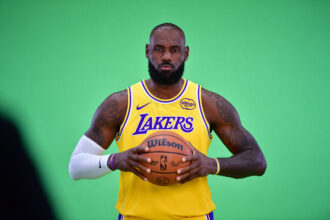
Kennard provided the scoring, but LeBron set the pace for the whole game. His 19 points and 13 assists don’t tell the full story. He controlled the tempo, picked out matchups, and kept Houston’s defense scrambling. Right from the start, he saw where Houston was weak and kept attacking those spots all night.
LeBron’s two-man plays with Kennard worked especially well, making Houston choose between helping on drives or sticking with shooters. Every time the Rockets tried to adjust, the Lakers had an answer—whether it was a quick pass, another screen, or a drive into the defense.
That kind of control is what makes a good playoff team great. It’s not just about making plays—it’s about knowing when and where to push. In Game 1, LeBron set the tone from beginning to end.
Houston’s Offensive Problem
Despite their athleticism, the Rockets looked just like many people expected on offense: disjointed and too dependent on one-on-one plays. They took more shots, but the quality wasn’t close to what the Lakers got. Too often, their possessions ended in isolation or last-second shots, which played right into the Lakers’ defensive strengths.
It was clear all game that Houston didn’t have a real floor leader. Without Kevin Durant, their offense was lost. Without someone to control the pace and set up good plays, they couldn’t find a steady rhythm. Even when they got an edge, they often missed chances to score, which let the Lakers keep the momentum.
Being explosive and athletic is good, but playoff basketball is about precision and smart choices. In Game 1, Houston had some good moments, but there were more times when they looked lost. That kind of imbalance is tough to beat against a disciplined team like the Lakers.
The Series Outlook
Game 1 showed one thing for sure: the Lakers have a formula that works in this matchup. Their offense creates good shots through structure, and their defense makes opponents uncomfortable and forces tough looks. That balance gives them control on both ends, which is exactly what you want in the playoffs.
If Doncic and Reaves come back later in the series, the Lakers’ advantage gets even bigger. They’d add more playmaking and shot creation to a system that’s already working. But even without them, what they showed in Game 1 suggests they can keep controlling the series.
Houston still has the athleticism to adjust, and KD’s return will definitely help their offense. But their execution and decision-making are still a step behind the Lakers. In the playoffs, the difference between structure and chaos often decides the outcome, and in Game 1, the Lakers clearly had the edge.